Hamiltonian Complexity Initiative

What is the computational complexity of simulating a given Hamiltonian? What is the computational complexity of finding its ground state?

These questions are fundamental to condensed matter physics, to computational complexity but also have deep practical merit. Ground state quantum computation (e.g. adiabatic quantum computation) utilize properties of the ground states of Hamiltonians to compute.

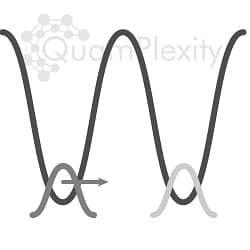
Adiabatic quantum computing generally relies on the idea of embedding a problem instance into a physical system, such that the systems lowest energy configuration stores the problem instance solution. […]
Quantum Software

We developed quantum computer algorithms which utilize quantum effects to

  1. Accelerate machine learning – particularly, deep learning
  2. Perform tensor operations on a quantum computer
  3. Simulate quantum chemistry and materials science

In our work, we have taken part in several experimental collaborations which have realized prototypes of our algorithms.

In his famous 1981 talk, Feynman proposed that unlike classical computers, which would presumably experience an exponential slowdown when simulating quantum phenomena, a universal quantum simulator would not. An ideal quantum simulator would be controllable, and built using existing technology. […]